Domain of y = log₁₀ (x+a) in the logarithmic function y = log10(x+a), the argument is 'x+a'. The natural thing is to multiply everything with x and get x > 1 but this isn't valid for all x it's valid only if x > 0 because if x < 0 you have to flip the signs > turns into < and < into.
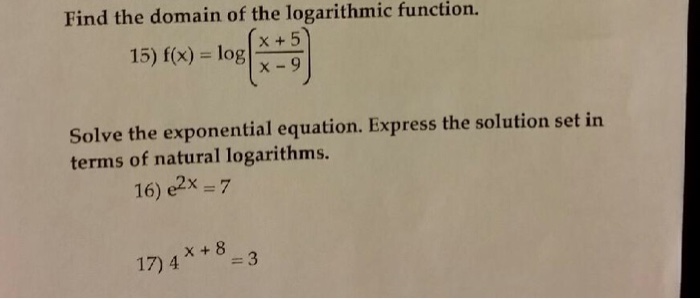
Solved Find The Domain Of The Logarithmic Function. X +5 15) | Chegg.com
The domain calculator allows you to take a simple or.
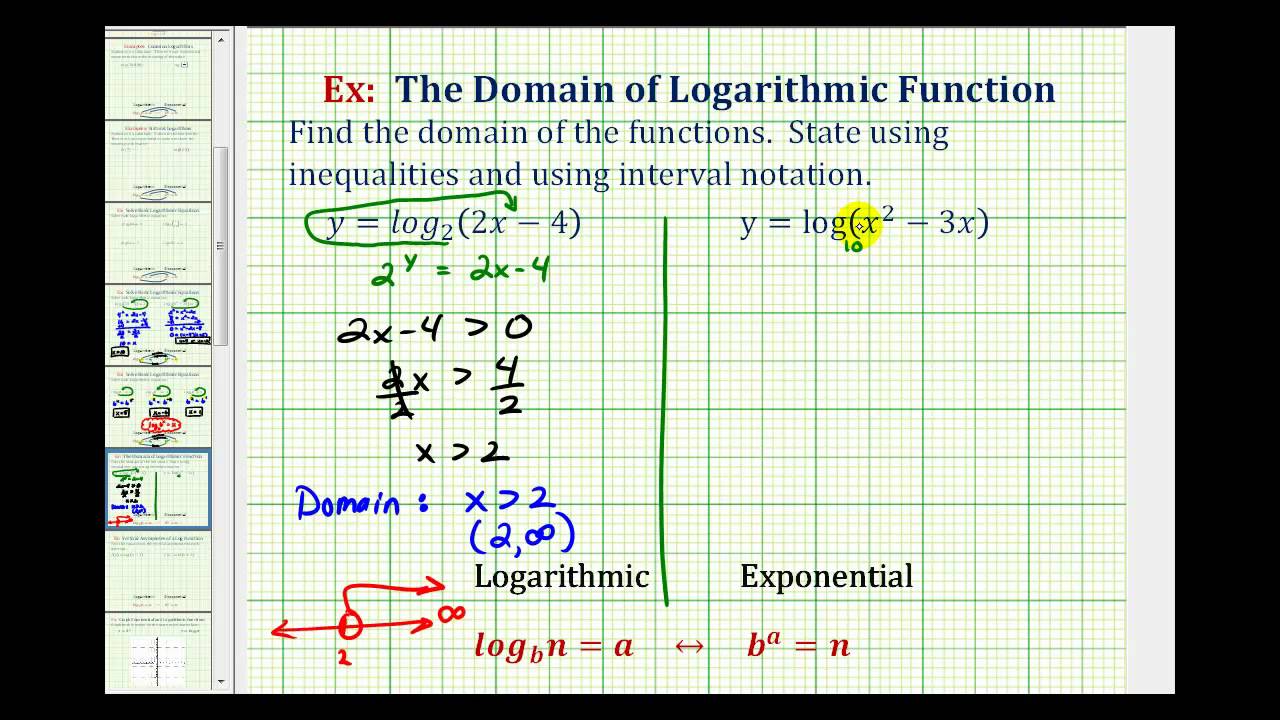
Finding domain of natural log. A function using the natural. A function is expressed as. From the fact explained above, argument must always be a positive value.
Okay so i am taking calculus 1 and thought i fully understood how to find the domain of functions until i saw one with a natural log on the top. Asap help with calculus (finding domain of a natural log) homework question. Enter the function you want to domain into the editor.
Find the domain and range y = natural log of x | mathway algebra examples popular problems algebra find the domain and range y = natural log of x y = ln (x) y = ln ( x) set the argument. So, the values of 'x+a'. As ln ( x) is only defined for positive x values, the domain of the composition ln ( ln ( x)) will be where ln ( x) > 0.
Start date sep 16, 2021; And the function has a. When finding the domain of a logarithmic function, therefore, it is important to remember that the domain consists only of positive real numbers.
If a function is defined by a formula and there is no domain explicitly stated, then the domain consists of all real numbers for which the formula makes ense. Domain and range » tips for entering queries enter your queries using plain english. We have ln ( x) > 0 e l n ( x) > e 0 x > 1 therefore, the domain of ln.
As you can see from the final three rows, ln(e)=1, and this is true even if one is raised to the power of the other.this is because the ln and e are inverse functions of each. First, we learn what is the domain before learning how to find the. From thinkwell's college algebrachapter 6 exponential and logarithmic functions, subchapter 6.2 logarithmic functions
To avoid ambiguous queries, make sure to use parentheses where necessary. That is, the argument of the logarithmic function. To find the domain of this type of function, just set the terms inside the radical sign to >0 and solve to find the values that would work for x.
Domain of a function calculator. Now, we can determine the range and domain of other logarithmic functions by considering how the function and the graph change as we introduce various constants. Press question mark to learn.
Y=f(x), where x is the independent variable and y is the dependent variable. Press j to jump to the feed. I'm working on a problem which requests that i find the domain of natural log.
The limit of the natural logarithm of x when x approaches infinity is infinity: According to the definition of the logarithmic function, base = a.

Limits And Logarithms - Youtube
The limit of natural logarithm of infinity, when x approaches infinity is equal to infinity:
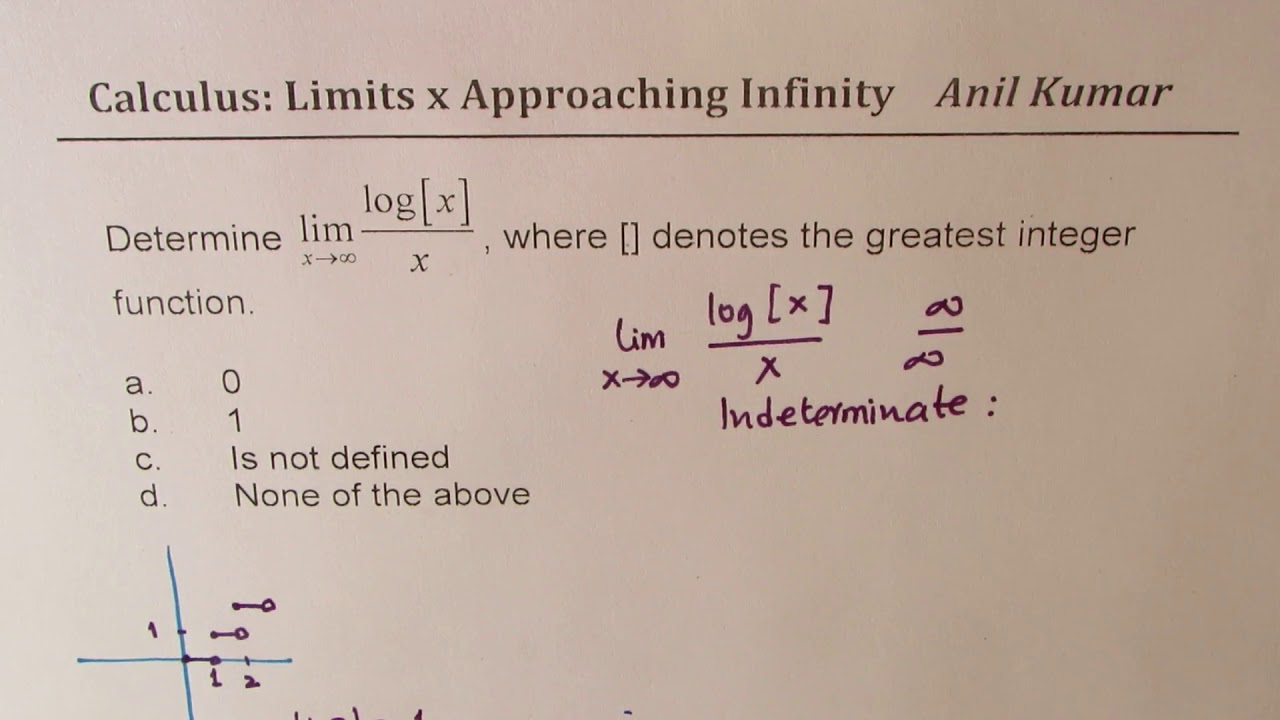
Natural log of infinity. The limit as as a approaches infinity is infinity. The natural log of ∞ is also represented as ln ( ∞) loge ∞ = ∞ (or) ln ( ∞)= ∞ both the common logarithm and the natural logarithm value of infinity possess the same value. It is also known as the log function of infinity to the base e.
There are two ways of denoting the log function of infinity to the base 10: You can also look at it as : Lim ln(x) is undefined x.
The derivative is y ′ = x 1 so it is never 0 and always positive. The natural log function of infinity is denoted as “log e ∞”. The limit near 0 of the natural logarithm of x, when x approaches zero, is minus infinity:
Lim ln(x) = ∞ x→∞. Make sure the test you are using to draw conclusions is apparent! It also serves as a divider between solutions of the natural log that are either positive or negative.
The natural log function is strictly increasing, therefore it is always growing albeit slowly. It is also called the log function of infinity to the base e. Ln ( infinity ) = x and you want to know x.
Every logarithmic equation can be written as an equivalent exponential equation. But notice that if you keep using greater values for x, e^x gets greater without bound continue reading kyle taylor The natural log of ∞ is also represented as ln (∞) loge ∞ = ∞ or ln (∞) = ∞ value of natural log infinity also read:
The log function of infinity to the base e is another name for it. So, to calculate the value of log infinity to the base 10, let us consider that at 10∞ = ∞. The opposite case, the natural logarithm of minus infinity is undefined for real numbers, since the natural logarithm function is undefined for negative numbers:
The natural logarithm of zero is undefined: Derivation of log 0 value with base 10 things to remember This video explains how to determine limits at infinity analytically and using a graph.
Determine if the series converges or diverges. The natural logarithm of 1 is 0. The natural logarithm of x is generally written as ln x, loge x, or sometimes, if the base e is implicit, simply log x.
If and on the other side if. “ l o g e ∞ ” denotes the natural log function of infinity. The natural logarithm of a number is its logarithm to the base of the mathematical constant e, which is an irrational and transcendental number approximately equal to 2.718 281 828 459.
In this case it would be: The opposite case, the natural logarithm of minus infinity is undefined for real numbers, since the natural logarithm function is undefined for negative numbers: E^x = infinity again, this is informal because e^x can never equal infinity.
This is a useful property to eliminate certain terms in an equation if you can show that the value in the natural logarithm is 1. If you don't have a calculator, you can leave the equation like this, or you can calculate the natural log values: Lim ln(x) = ∞, when x.
According to the definition of the logarithmic function, e n = ∞; In this case, the base is 10 = a and y = ∞. The natural log function of infinity is specified as “loge ∞”.
Base, b = e = 2.718 so, ( 2.718) n = ∞ if we want e n to approach ∞ then n should approach ∞. The natural logarithm of one is zero:
Log b (x y) = y ∙ log b (x) for example: Just set the terms in the parentheses to >0 and solve.
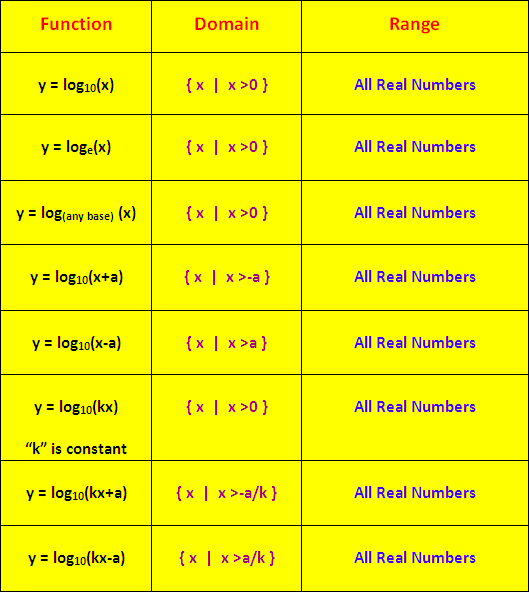
Domain And Range Of Logarithmic Functions
The domain is 0 < x < + ∞ remember that the range is the set of all the values that the dependent variable can take.

Domain of natural log. Recall that logarithmic is inverse function of exponential. Domain of log (x) assuming domain is referring to a real function property | use as. The domain is d =]0, +∞[ because ln(x) exists if and only if x > 0.
The limit as as a approaches infinity is infinity. For example, the domain of y=ln (x) could be x>1 depending on how i wish to define it. The natural logarithm, also called neperian logarithm, is noted ln.
Assuming log is the natural logarithm | use. Notice in log_a y :a is same of a^x if a is. Check out the graph to see which values work for x.
Exponential function is given as f(x)=a^x we define inverse as y=a^x x=log_a y since range of function f is positive numbers,hence inverse can only define on positives. Properties of ln (x) graph in order to sketch the ln curve, it is necessary to understand its properties first. The range is i = r =] −∞, + ∞[ because ln is strictly croissant and lim x→−∞ ln(x) = 0 and lim x→+∞ ln(x) = +∞.
The derivative of the natural logarithm function. When finding the domain of a logarithmic function, therefore, it is important to remember that the domain consists only of positive real numbers. In cases where the context of the problem limits the domain to a smaller set.
From thinkwell's college algebrachapter 6 exponential and logarithmic functions, subchapter 6.2 logarithmic functions A function using the natural log (ln). Therefore, the domain of the “standard” logarithmic function is all numbers greater than 0 up to positive infinity:
For example, the domain of the function (that is, the values for which it makes sense. In this case, we will often refer to this set as the natural domain of the function. That is, the argument of the logarithmic function must be greater than zero.
In the graph, we see that on the left side, the function goes towards negative infinity. If you don't have a calculator, you can leave the equation like this, or you can calculate the natural log values: For example, the natural domain of y=ln (x) is x>0.
Fact to be known about domain of logarithm functions a very important fact that we have to know about the domain of a logarithm to any base is, a logarithmic function is defined only for positive values of argument for example, if the logarithmic function is y = log10x, then the domain is x > 0 or (0, +∞) domain of y = log₁₀ (x) However, the domain of a function could be a domain that has been specified. Asap help with calculus (finding domain of a natural log) homework question.
The logarithm of x raised to the power of y is y times the logarithm of x. Start date sep 16, 2021; Your domain will simply be a list.
Joined sep 16, 2021 messages 11. This is a useful property to eliminate certain terms in an equation if you can show that the value in the natural logarithm is 1. Please subscribe here, thank you!!!
It also serves as a divider between solutions of the natural log that are either positive or negative. Natural domain is the domain that the function has if i were to 'leave it naturally' by itself. The natural logarithm of 1 is 0.
The natural thing is to multiply everything with x and get x > 1 but this isn't valid for all x it's valid only if x > 0 because if x < 0 you have to flip the signs > turns into < and < into >, so for x < 0 we get 1 x ⋅ x > 1 ⋅ x after we multiply the inequality by x which is just x < 1. If and on the other side if. Log 10 (2 8) = 8∙ log 10 (2) derivative of natural logarithm.
The largest subset of the real numbers for which the expression is defined. This will be a list of x and y coordinates.
Press [mode] and put the calculator in seq mode. Locate the power button then look two buttons above that to find the ln button.
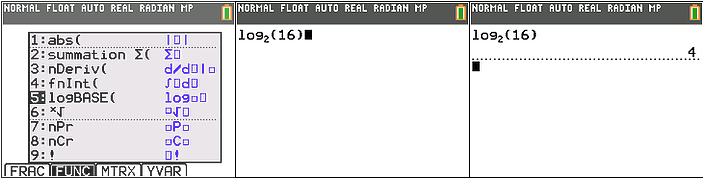
Any Base Logarithms On The Ti-84 Plus Ce - Ti84Calcwiz
Y = log 3 x y=\log_3 x y = lo g 3 x.
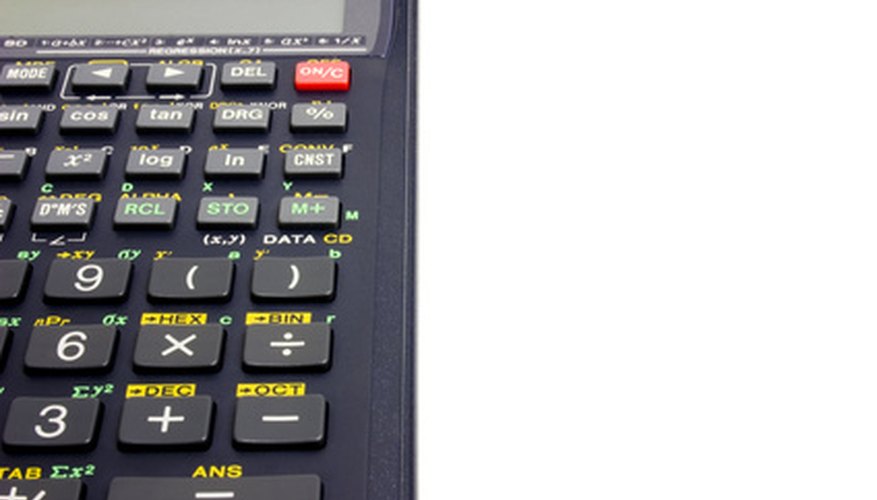
How to put natural log in ti-84. You’ll know that you clicked the 2nd button if your blinking cursor turns. What is the change of base rule? To access the stat calculate menu, press
You can use the math key to get a menu including logbase(. Use the arrow keys to highlight function and press [enter]. I've heard that this is possible, but i've never actually seen how this can be done.
Any base logarithm on a ti 84 plus you. #1.express the logarithm in terms of log2m and log2n: Follow these steps to change the mode of your calculator:
Comments sorted by best top new controversial q&a add a comment Highlight seq in the fifth line to put the calculator in sequence mode. This video covers logs with base 10 and natural logs.
Use a calculator to obtain a decimal approximation for the solution. A logarithm of base e is also known as the natural logarithm and is written as ln. Express log z+ 2 log y.
Ln represents loge by default, so you shouldn't need to do any other tinkering there. The natural log is a button, ln, on the calculator. To enter a log with a base other than those, divide the log of the number with the log of the base, so log6(8) would be log(8)/log(6) or ln(8)/ln(6).
Regression modeling on the ti 84 plus dummies. Select a regression model from the stat calculate menu to activate the regression wizard. Most students know that you can calculate a base 10 logarithm by pressing the [log] button on the keypad, but the option to.
Johnsmith3126@technisolutions.nethere i show you how to do logarithms 3 different ways.don't forget to tell people about me in order to gro. Terplots regression on the ti 84 you. I don't know what this means, but from what i've heard my calculator is missing the required software to run a log.
You should see a log with two empty boxes. Use the arrow keys to highlight stat diagnostics on and press [enter]. You can also use alpha f3( the zoom button) window to get a menu that includes logbase( personally, i prefer to just use the change of base formula (it is helpful for other things, and it.
Ti 84 calculator tutorial 8 hour course. Press the ln button then enter the value or variable that you are attempting to find the natural log of. Rules and code of conduct;
Fit the logarithmic regression model natural logarithms and common logarithms. The first screen shows this procedure. You will now be able to type the base of the log you would like to calculate.
To highlight an item in the mode menu, use the arrow keys to place the cursor on the item, and then press [enter]. To add and subtract logarithms of bases other than 10 and e, the change of base. Use the change of base formula.
E^x = 20.9 what is the solution in terms of natural logarithms? 1 answer darshan senthil oct 22, 2014 you can work with natural logs by pressing the ln button, which is located 3 rows up on the leftmost column. I should clarify that when i say log i mean a problem that would be put into a.
To enter a log with base 10, press the log button. You would use the ln in the same manner that you use other functions of the calculator. To enter a natural log, press the ln button.
From there, press the math key and scroll down until you get to option a: How to calculate the logarithm with any base on the ti84 from www.youtube.com. Pre calculus how to find the exponential regression curve using ti 83 84 calculator you.
In order to use this function, press 2nd and then whichever function you want to choose — such as 2nd, off. Express the logarithm in terms of log2m and. All software, os and apps;
The power is in understanding transformations and be able to identify the vertical asymptote. Logarithm on ti 84 detailed login instructions loginnote Mar 23, 2013 · filed under difficulty:
Can you charge ti 84 calculator? As mentioned before, the most basic 2nd function is off, but other common ones include the square root sign (found above the x² button) and pi (above the ^). To graph a logarithmic function, first go to the y= screen.
The solution set is .
It is of use to any student to be able to prove these 4 rules of natural logarithms. Check out the graph to see which values work for x.
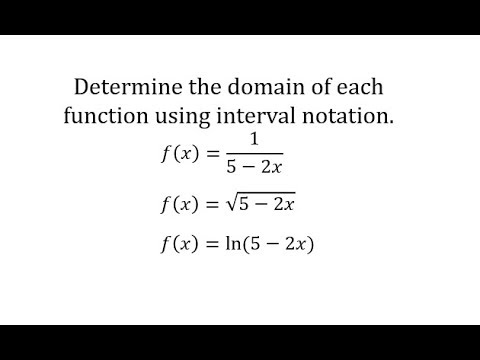
Domain Of Rational, Square Root, And Logarithm Functions - Youtube
T theperfecthacker nov 2005 10,610 3,268

Natural log domain. This will be a list of x and y coordinates. Here, we will learn how to determine the domain and range of logarithmic functions. Okay so i am taking calculus 1 and thought i fully understood how to find the domain of functions until i saw one with a natural log on the top.
The range is i = r =] −∞, + ∞[ because ln is strictly croissant and lim x→−∞ ln(x) = 0 and lim x→+∞ ln(x) = +∞. Domain of a function calculator. The domain is d =]0, +∞[ because ln(x) exists if and only if x > 0.
Click the blue arrow to submit and see the result! Properties of ln (x) graph in order to sketch the ln curve, it is necessary to understand its properties first. I just asked a similar question, but i got help for that one, and now i am stumped again.
The natural logarithm of x is generally written as ln x, loge x, or sometimes, if the base e is implicit, simply log x. Natural domain is the domain that the function has if i were to 'leave it naturally' by itself. When finding the domain of a logarithmic function, therefore, it is important to remember that the domain consists only of positive real numbers.
Never thought of it that way. Definition of natural logarithm when e y = x then base e logarithm of x is ln ( x) = log e ( x) = y the e constant or euler's number is: From thinkwell's college algebrachapter 6 exponential and logarithmic functions, subchapter 6.2 logarithmic functions
The four main ln rules are: The range of exponential functions is always equal to all real numbers since we have no restrictions on the output values. E ≈ 2.71828183 ln as inverse function of exponential function the natural logarithm function ln (x) is the inverse function of the exponential function e x.
If you're not familiar with the graph and domain of ln(x), then perhaps you are not ready for this exercise. Search advanced search… search titles. If you take the natural log of 1 divided by a number, it is equivalent to the negative natural log of that number.
ronl click to expand. Natural domain is a concept from complex analysis; The natural log, or ln, is the inverse of e.
I can't think of a way to get around it. If you take the natural log of a term with an exponent , it is equivalent to times the natural log of. Your domain will simply be a list.
The natural thing is to multiply everything with x and get x > 1 but this isn't valid for all x it's valid only if x > 0 because if x < 0 you have to flip the signs > turns into < and < into >, so for x < 0 we get 1 x ⋅ x > 1 ⋅ x after we multiply the inequality by x which is just x < 1. A function using the natural log (ln). However, the domain of a function could be a domain that has been specified.
For example, the domain of y=ln (x) could be x>1 depending on how i wish to define it. The domain calculator allows you to take a simple or complex function and find the domain in both interval and set notation instantly. The rules of natural logs may seem counterintuitive at first, but once you learn them they're quite simple to remember and apply to practice problems.
For example, the natural domain of y=ln (x) is x>0. Enter the function you want to domain into the editor. Just set the terms in the parentheses to >0 and solve.
A very important fact that we have to know about the domain of a logarithm to any base is, a logarithmic function is defined only for positive values of argument for example, if the logarithmic function is y = log10x, then the domain is x > 0 or (0, +∞) domain of y = log₁₀ (x) in the logarithmic function y = log10(x), the argument is 'x'. The natural logarithm of a number is its logarithm to the base of the mathematical constant e, which is an irrational and transcendental number approximately equal to 2.718 281 828 459. The domain of logarithmic functions is equal to all real numbers greater or less than the vertical asymptote.
That is, the argument of the logarithmic function must be greater than zero. Example finding the domain of a natural log function symbolically and then confirming the results with a graph. For example, the domain of the function (that is, the values for which it makes sense.
The natural logarithm, also called neperian logarithm, is noted ln.