Most of the time, you should not use a comma before because when it connects two clauses in a sentence. False 2 not attempted select.

4 Ways To Use Therefore In A Sentence - Wikihow
A semicolon can be used before a coordinating conjunction that joins two independent clauses when at least one of those clauses contains comma.
Can i suse a semicolon before because. These sections must be independent and complete sentences, but closely linked in some way:. When a semicolon is used to join two or more ideas (parts) in a sentence, those ideas are then given equal position or rank, for example, some people write with a word. Do you use a capital letter after a semicolon?
We can also use since as a subordinating conjunction to mean because. In this case, we use a coordinating. “the battle came to an end;
After all, the lead enemy had died.”. A semicolon can replace a conjunction that merges two sentences if your two sentences feel like cause and effect. The general answer is no.
This is where the comma rule gets tricky. The most common way to use a semicolon is to help join closely connected ideas in a sentence. We only use a comma before since if the preceding clause is negated by the.
The semicolon is used to indicate a pause, usually between two main clauses, that needs to be more pronounced than the pause of a comma. Here, “ after all ” is the transitional phrase and we have used a semicolon before it to relate the two. The purpose of a semicolon is to replace the comma/conjunction combo, not to replace just the comma.
A semicolon should be followed by a capital letter only if the word is a proper noun or an. In other words, if you could merge your two sentences into one with a. Use a semicolon before such words and terms as namely, however, therefore, that is, i.e., for example, e.g., for instance, etc., when they introduce a complete sentence.
Use a semicolon before such words and terms as namely, however, therefore, that is, i.e., for example, e.g., for instance, etc., when they introduce a complete sentence. Do not use a semicolon when a dependent clause comes before an independent clause. It is never a good idea to use a semicolon before a conjunction.
For example, if you are writing a recipe and need to indicate that one step is a part. Discovering you are the victim of a. How to use a semicolon instead of a conjunction when we use independent clauses in a sentence, they’re typically connected with each other.
For instance, i can write: As we have stated above, semicolons can be used to join two complete sentences. Because is a subordinating conjunction, which means that it connects a.
The hybrid between a colon and a.
You don’t usually need a semicolon with a coordinating conjunction. Use a period (full stop) or a semicolon before however when it joins two sentences.

Comma Before "Because" | When To Use A Comma Before Because • 7Esl
But i would not want to say that it could *never* be correct.
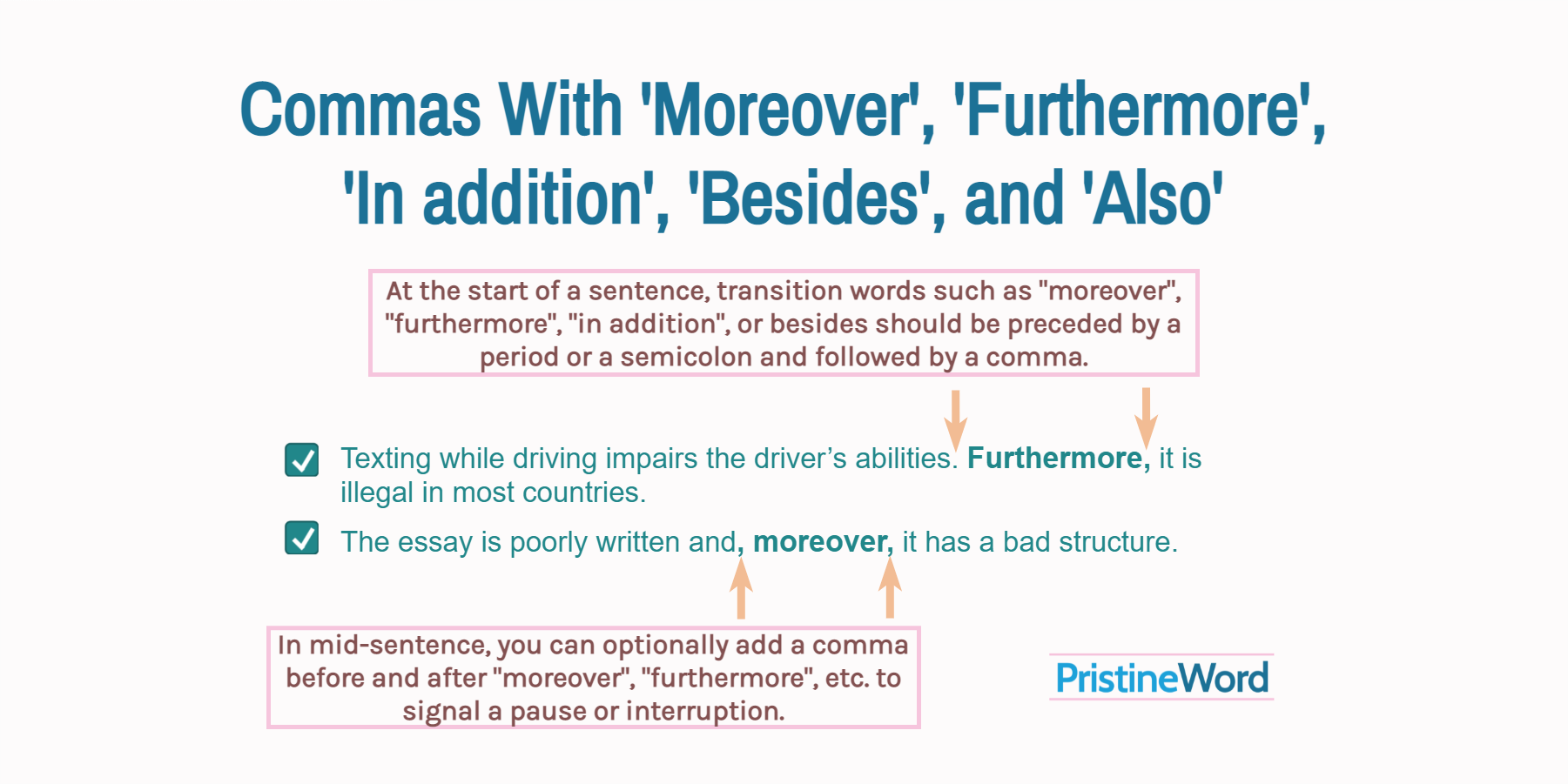
Because after semicolon. Use a comma after the first independent clause when. How to use a semicolon, once and for all 1.1. Stylistically, placing a major “stop” before a conjunction, (i.e.
You can't avoid this by using the braces, because an accidental semicolon after the close paren, and before the open brace, is a syntactically valid program. Using a comma before however (or any other conjunctive adverb) is a common. Because each half of that long sentence has a conditional clause that must contain a comma, it’s ok to use a semicolon before the “and” that separates those two parts.
The semicolon is amongst the youngest of the punctuation marks. The general answer is no. It is correct to use a period.
According to punctuation rules, the semicolon may be used instead of definite commas. Where there is a list of things related to the because, a colon will absolutely work: You usually would use a comma.
Do you use a capital letter after a semicolon? It was introduced in venice in 1494. Do not use a comma.
Linking independent clauses separated by a transitional phrase or conjunctive. In comparison to the full stop, which was invented in the 3rd century bc, it is practically a. In fact, at least with the example above, it'd read better without any punctuation.
A semicolon should be followed by a capital letter only if the word is a proper noun or an. Because of this relationship, the first word after a semicolon does not need to be. Good style dictates that there should be no comma between these two.
Use commas for direct address, tag questions, mild interjections, and yes/no: Because it was raining, i took a taxi home. Because is a subordinating conjunction, which means that it connects a subordinate clause to an independent clause;
To our surprise, they were brothers. They connect the result of something with its reason. The word because is a linking word and the semicolon isn't appropriate where there is a link.
It also separates a series of items which contain internal punctuation. Use a semicolon before such words and terms as namely, however, therefore, that is, i.e., for example, e.g., for instance, etc., when they introduce a complete sentence. I hate to say this, john, but this.
You can use a semicolon before and (which is a type of conjunction) when the and is used to merge two independent clauses that contain their own commas. In this section, we’ll tell you when to use a semicolon in a list. As, because and since all introduce subordinate clauses.
The second part of the question asks about a colon following the word because. As, because and since are conjunctions. Semicolons join two independent clauses with related meanings into a single, more complex sentence.
The semicolon the semicolon is used to separate independent clauses in specific situations. In this case, a semicolon before. Because because is more common than.