Valence electrons and open valences. The rule is as follows:
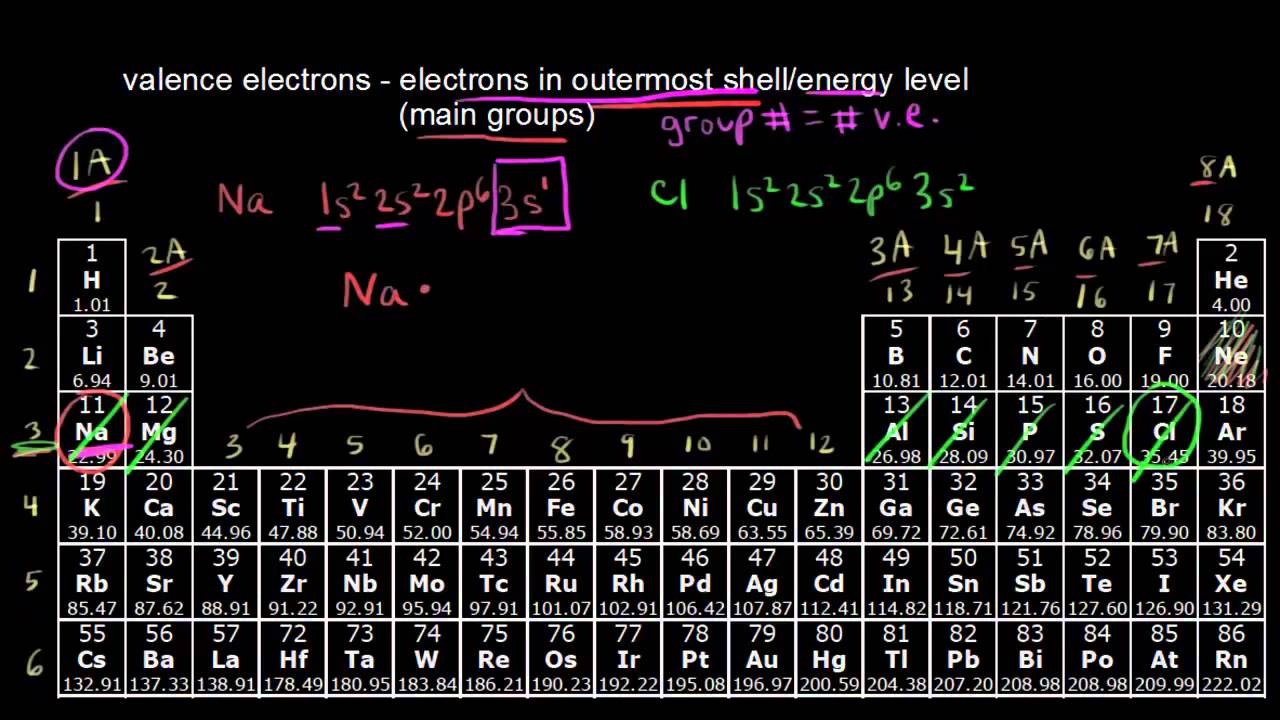
Counting Valence Electrons For Main Group Elements (Video) | Khan Academy
Now we will learn how to determine the valence electron of arsenic.

As valence electrons. Valence electrons, in simple words, are the electrons revolving continuously in the outermost shell or orbit of an atom. That is, the total number of electrons in the last orbit of an element after electron configuration is called the valence electron. The electrons present in the outermost shell or orbit of an atom is called as valence electrons.
The outermost shell or the valence shell is the shell. For brevity, many chemists record the electron configuration of an. If there are more than eight electrons, then the remaining.
Apply the rule of the periodic table to your element. Valence electrons the electrons in the last orbit which also determines mainly the electrical properties of the elements are known as valence electrons. A valence electron is an electron that is associated with an atom, and that can participate in the formation of a chemical bond;
Is zeff the same as valence electrons? These electrons are farthest away from the nucleus. 119 rows valence electrons:
The electrons in the outermost shell are the valence electrons the electrons on an atom that can be gained or lost in a chemical reaction. Hence it has 2 valence electrons. Thus, valence electrons are defined as, the number of electrons present in the outermost shell of an element that takes part in chemical bonding is called valence electrons.
Oxygen is found in period 2, group 16. However, valence electrons can be easily identified by arranging electrons according to the bohr principle. The electrons in the highest numbered subshells are the valence electrons, which comprise the valence shell of the atom.
Valence electrons are electrons that are found in the outermost ring of an atom. The outermost orbit of an atom contains. Valence electrons are the s and p electrons in the outermost shell.
When we study and observe the atom of an element, we come. Because valence electrons have higher energy than electrons in inner orbits, they are involved in the. Valence electrons can also be determined as the electrons present in the shell with highest principal quantum number (n).
Valence electrons are electrons that located in the outermost electron shell of an atom. Sap‑1 (eu) , sap‑1.a (lo) , sap‑1.a.3 (ek) about transcript valence electrons are the electrons in the outermost shell, or energy level, of an atom. Hence, the valence electron depend of scandium is 2.
These electrons, being the furthest from the nucleus and thus the least tightly held by the atom, are. Valence electrons are electrons in the outer shells that are not filled. Because they are in the outermost ring, valence electrons play an important role in forming.
If an element is not a transition metal, then valence electrons. The valence electrons of the element play an. The electrons present in the inner shell are core electrons.
Transition metals has ____ valence electrons johnylit johnylit 01/09/2021 chemistry college answered 15. Click here 👆 to get an answer to your question ️ 15.
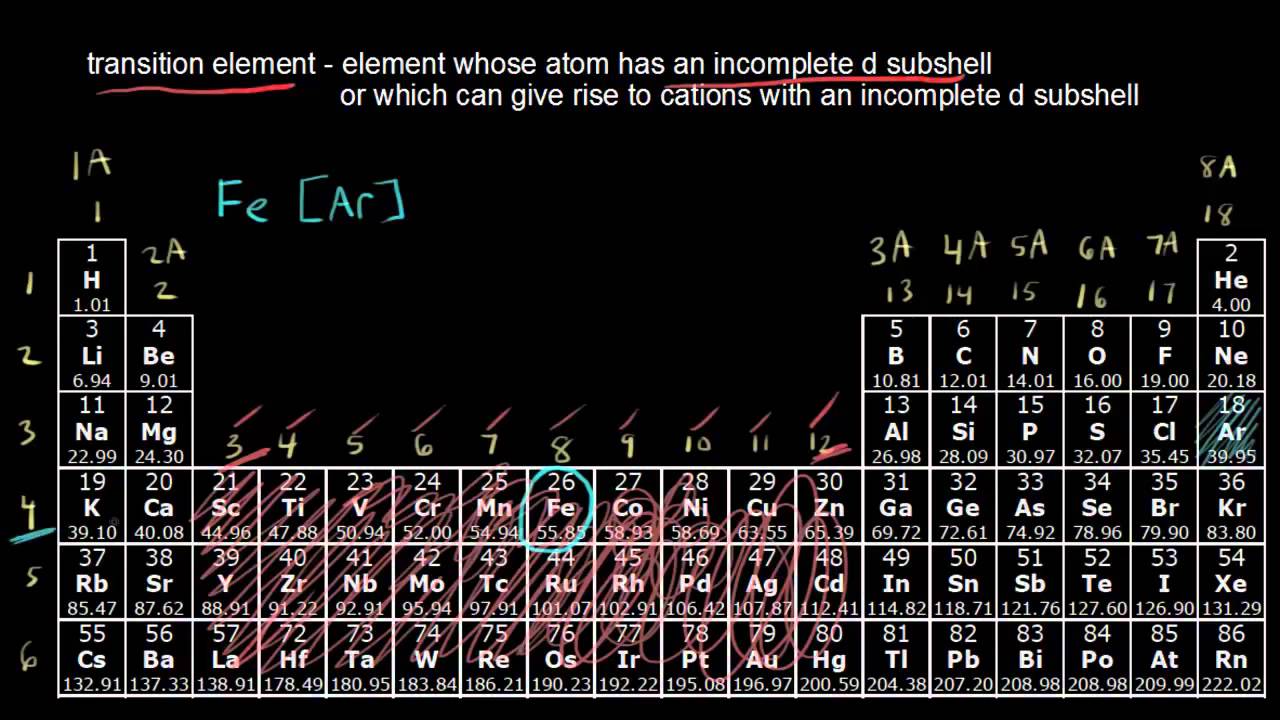
The Periodic Table - Transition Metals (Video) | Khan Academy
Because most transition metals have two valence electrons, the charge of 2+ is a very common one for their ions.

Do all transition metals have 2 valence electrons. By admin july 30, 2022 If so, why don’t they all form 2+ ions? As for the electron configuration for transition metals that are charged (i.e.
No shell can have more than 32 electrons. How many valence electrons do the transition metals have? Transition metals have 1 to 2 valence electrons.
1 or 2 valence electrons. How many electrons do transition elements have? Also, the concept of filling the outer shell doesn't really work with metals the way it's taught in high school.
But for most of the transition and inner transition elements, the valence electrons are the electrons present in the shells outside the noble gas core. 7 level 2 butimquitesleepy op · 8y What level of chemistry class have you taken most recently?
See answer (1) best answer. It is due to the fact that valence is the electrons in the outermost shell and because the s shell fills up before the d shell of a preceding energy level. Why do transition metals have a valence of 2?
How many valence electrons do transition matals have? Do all transition metals only have 2 valence electrons because their electron configurations are [noble gas]xs2ydz no. Aug 23, 2014 most transition metals have 2 valence electrons.
Why do valence electrons vary in. However, the outermost s electrons are always the first to be removed in the process of forming transition metal cations. Of course, there are still some rules.
1 or 2 valence electrons. Transition metals has ____ valence electrons 1 Most transition metals have an electron configuration that is ns2(n −1)d, so those ns2 electrons are the valence electrons.
This is the case for iron above. Transition metals with an oxidation state. 4s and 3d have similar energy levels (and so on), and that's more or less the best way to think of valence electrons.
In the ground state, the electron configuration of the transition metals follows the format, ns 2 nd x. No, all transition metals do not have the same number of valence electrons. 119 rows valence electrons chart for all elements valence electrons:
This is the case for iron above. Valence electrons are the sum total of all the electrons in the highest energy level (principal quantum number n). It depends on their oxidation state.
Some characteristic transition metal ions in turn can form brightly colored solutions. Transition metal, any of various chemical elements that have valence electrons—i.e., electrons that can participate in the formation of chemical bonds—in two shells instead of only one. Because most transition metals have two valence electrons, the charge of 2+ is a very common one for their ions.
Transition metals possess several interesting properties such as they can form ions with different charges.
Its oxidation is +2 in which it can lose its 4s2 electrons. Experts are tested by chegg as specialists in their.

In[Znbr_(4)]^(2-)` Electron Pairs In `Sp^(3)` Hybrid Orbitals Of The Zinc Atom Form Bonds To - Youtube
(iii) cr (z = 24), cr2+ (z = 22) the electronic configuration of cr2+ is 1s2 2s2 2p6 3s2 3p6 3d4 the number of unpaired electron is 4.
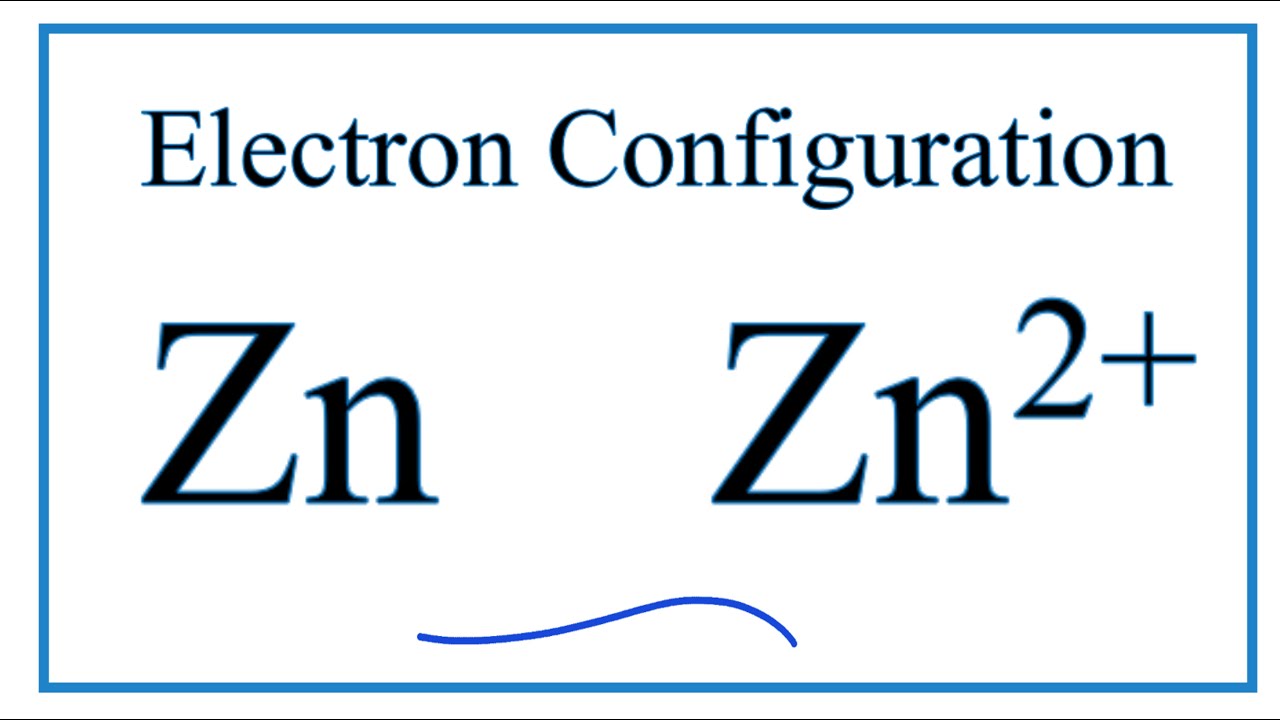
Zn unpaired electrons. 1s 2 2s 2 2p 6 3s 2 3p 6 4s 2 3d 10 zn 2+: It contains 4 unpaired electrons. Therefore, the valence electrons of zinc are two.
Ni 2+ has 2 unpaired electrons. That is a consequence of lanthanoid contraction due to poor shielding effect of 4f electrons in zr and 5f electrons in hf. The number of unpaired electron is 5.
A neutral iron atom contains 26 protons and 30 neutrons plus 26. The configuration for the free atoms is: What element has 40 protons 54 neutrons and 38.
Barium has no unpaired electrons. The number of electrons in an unpaired state in the last orbital after the electron configuration of an atom is called the valency of that element. This is because of the presence of unpaired electrons and partially filled d orbitals.
1s2 2s2 2p6 3s2 3p6 3d10 4s2 4p0 its valence shell orbitals are 3d and 4s. How many unpaired electrons are there in the zn 2+ ion in the zn(nh 3) 6 2+ complex ion? Zn 2+ has [ar]3d 10 electronic configuration.
It contains 0 unpaired electrons. Zn, fe, ca or ge 1. It has no unpaired electrons.
Zn +2 electronic configuration is [ar] 4s 0 3d 10. 1s 2 2s 2 2p 6 3s 2 3p 6 4s 0 3d 10 zn 2+ has 0 unpaired electrons. Mn +2 electronic configuration is [ar] 4s 0 3d 5.
Find an answer to your question which atom will have unpaired 3d electrons? Zn has an electronic configuration of : How many electron shells does a fe atom have?
In chemistry, an unpaired electron is an electron that occupies an orbital of an atom singly, rather than as part of an electron pair.each atomic orbital of an atom (specified by the three quantum. It has five unpaired electrons so. So it is dia magnetic.
Iron is 4s^2 3d^6 so it will have 4 unpaired 3d electrons. The number of unpaired electrons in zn2+ is (a) 2 (b) 3 (c) 4 (d) 0. The zinc ion has a 2+ charge.
Check answer and solution for above question from chemis An unpaired electron has a magnetic dipole moment, while an electron pair has no dipole moment because the two electrons have opposite spins so their magnetic dipole fields are in. Ni 3+ has [ar]3d 7 electronic configuration.
Because of these two things, they form strong bonds and therefore have high melting and boiling points. Zinc fills up its 3d sublevel with 10 electrons, all pairs. So, there are no remaining unpaired electrons.
How many valence electrons does sn have, and what are the specific valence electrons for sn? How many valence electrons does a tin sn atom have.we summarize all relevant answers in section q&a of website linksofstrathaven.com in category:

File:electron Shell 050 Tin.png - Wikimedia Commons
Sn has 50 total electrons and is in the group 4a elements on the periodic table.
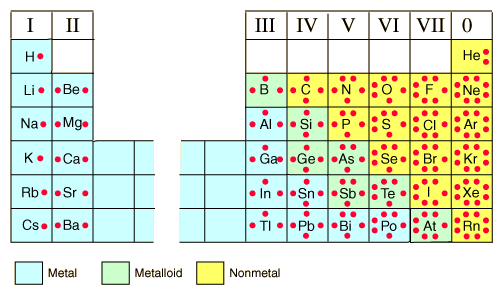
Sn valence electrons. How many valence electrons does a tin sn atom have. Therefore, the number of inner electrons (the. All these elements have a valency state of four (tetravalent).
This valence electrons table gives the valence electrons of all the elements of periodic table. How many valence electrons does sn 2+ have?. How many valence electrons does br have, and what are the specific valence electrons for br?
Verified by toppr tin has 4 valence electrons. Click on 'element atomic number', 'element symbol', 'element name' and 'element valence electrons ' headers to sort. Atomic mass 118,71 learn more about the atomic mass.
In chemistry and physics, a valence electron is an electron in the outer shell associated with an atom, and that can participate in the formation of a chemical bond if the outer shell is not closed. In this case, the valency of the scandium ion is +3. How many valence electrons does a tin sn atom have
For example, carbon is in group 4 and has 4 valence electrons. I don't understand that the basic quantum number of valence electrons for tin. This electron configuration shows that the scandium ion has three shells and the last shell has eight electrons.
Tin has an atomic number of 50 so right from the start you know that its electron configuration must account for a. Blog finance.see more related questions in the comments below. Periodic table of elements with valence electrons trends in the below periodic table you can see the trend of valence electrons.
Sn has 50 total electrons and is in the group 4a elements on the periodic table. Tin is a silvery malleable metallic. The valence electrons (sn) draft.
Tin is located in group 14 of the periodic table, which means that it has 4 electrons in its outermost shell, i.e. Uses used as a coating for steel cans since it is nontoxic and noncorrosive. In this video we’ll use the periodic table and a few simple rules to find the number of protons and electrons for neutral tin (sn) and the tin ions (sn2+, s.
Let's put the chlorine here on the side. This electron configuration shows that the scandium ion (sc 3+) has acquired the electron configuration of argon. Tin has 4 valence electrons.
8 which has maximum unpaired electron. It is found that by increasing valence electron concentration vec the diameter of fermi sphere 2kf. The presence of eight electrons in the valence shell of an atom imparts stability to that particular atom.
As silicon belongs to group 14 (iva) along with carbon (c), germanium (ge), tin (sn), lead (pb), and flerovium (fl). The valence of an electron is the outer shell of an electron and can participate in the formation of a chemical bond. Valence electrons 2,4 atomic number 50 learn more about the atomic number.
Number of valence electrons (express your answer as a series of orbitals in order of increasing orbital energy.) specific valence electrons: To attain stability, atoms transfer or share electrons within themselves in such a way that they can satisfy the octet rule and attain noble gas configuration. Students progress at their own pace and you see a leaderboard and live results.
The nearest noble gas that is before sn is kr, which has 36 electrons. Tin is located in group 14 of the periodic table, which means that it has 4 electrons in its outermost shell, i.e. In a single covalent bond, both atoms in the bond contribute one valence electron in order to form a shared pair.
119 rows valence electrons: Find the item you want in the periodic table.
For transition metals, like fe, not all of the valence electrons have to be used to form chemical bonds with other elements. Most transition metals have 2 valence electrons.

Electronic Configuration - How Many Valence Electrons Do Elements In The D Block Have? - Chemistry Stack Exchange
Group 2 (ii) (alkaline earth metals) 2:
Transition metal valence electrons. A valence electron can either absorb or release energy in the form of a photon. Some characteristic transition metal ions in turn can form brightly colored solutions. The number of valence electrons.
As for the electron configuration for transition metals that are charged (i.e. This tendency is called the octet rule, because each bonded atom has 8 valence electrons including shared electrons. Similarly, a transition metal tends to react to form a d 10 s 2 p 6 electron configuration.
A valence electron can exist in the inner shell of a transition metal. For fe this means we have 8 valence electrons. Periodic table group valence electrons;
These metals have a long way to go to get to eighteen electrons, and sometimes they cannot fit that many ligands in. Occasionally, electron counts can be as low as eight electrons. In the ground state, the electron configuration of the transition metals follows the format, ns 2 nd x.
Let's consider the chemistry of cobalt which forms complexes that contain either co 2+ or co 3+ ions. Perhaps this is where you are getting the idea of two valence electrons. Group 1 (i) (alkali metals) 1:
A large range of complex ions in various oxidation states, coloured complexes, and catalytic properties either as the element or as ions (or both). Most transition metals have an electron configuration that is ns2 (n−1)d , so those ns2 electrons are the valence electrons. Perhaps this is where you are getting the idea of two valence electrons.
Valence electrons are the sum total of all the electrons in the highest energy level (principal quantum number n). The transition metals have at least two valence electrons, and more. Can you tell how many valence electrons are in transition metals?
Transition metal, any of various chemical elements that have valence electrons—i.e., electrons that can participate in the formation of chemical bonds—in two shells instead of only one. Transition metals possess several interesting properties such as they can form ions with different charges. The transition metals have at least two valence electrons, and more.
These cases often occur in early transition metals, such as titanium or tantalum. Valence electrons also determine the electrical conductivity of an element. An atom consisting of a closed shell of valence electrons will usually be chemically inert.
No logic here, only tradition. But for most of the transition and inner transition elements, the valence electrons are the electrons present in the shells outside the noble gas core.