These molecules provide energy for various biochemical processes in the body. Atp is broken into adp and pi and energy is released.
How Is Energy Stored And Released By The Atp? - Quora
Usually in living cells it is only the terminal phosphate removed.

How does atp store energy. Atp has more energy than adp, which means it takes energy to make atp. It stores the energy released in the oxidation of glucose during cellular respiration. When the phosphate bonds are formed, it is anabolic, consuming energy.
It is the organic compound composed of the phosphate groups, adenine, and the sugar ribose. This is a question our experts keep getting from time to time. In a process called cellular respiration, chemical energy in food is converted into chemical energy that the cell can use, and stores it in molecules of atp.
Cells store energy and release energy using atp through the atp cycle, a process that involves glycolysis and cellular respiration, as well as the krebs cycle. Altering the total amount of kinetic energy within atp b. How does atp release energy that's stored within the molecule?
Why does atp store energy for cells?. Atp or adenosine triphosphate acts as the energy currency of the cell. The demand for energy is low, so the oxidative system takes its time producing atp via three ways:
This occurs when a molecule of adenosine diphosphate (adp) uses the energy released during cellular respiration to bond with a third phosphate group, becoming a molecule of atp. The high energy bond is broken and a phosphoryl group is removed. When energy is needed anywhere in the cell (for.
Energy in adp and atp plants and animals use adp and atp to store and release energy. Microorganisms capture and store energy metabolized from food and light sources in the form of atp. Energy is stored in the form of high energy phosphate bonds, which is released when it is broken.
When a cell needs to use energy, an atp molecule can break off its third phosphate, releasing the energy. These atp molecules are synthesized by. How does it store energy?
Atp (adenosine triphosphate) stores energy in its high energy phosphate bonds. Atp consists of adenine, ribose, and three phosphate groups, and the phosphate. During cellular respiration energy in food is converted into chemical energy that can be used by cells.
Energy is released from atp when the end phosphate is removed. Altering the number of oxygen groups revolving around the central molecule c. It's a nucleotide with three phosphate groups.
When the cell requires energy, atp is broken down through hydrolysis. Atp is formed through the process of cellular respiration, in which oxidation of food (organic matter) releases energy, which is stored as atp. This occurs when a molecule of adenosine diphosphate (adp) uses the energy released during cellular respiration to bond with a third phosphate group, becoming a molecule of atp.
Altering number of carbon groups tied to the phosphate backbone When they do break they release a considerable amount of energy. Therefore, it is called “energy currency of the cell”.
The bonds between phosphate groups are unstable and have a low activation energy so are easily broken. The energy is stored in the bonds. How does atp store energy.
Altering number of phosphate groups tied to the carbon backbone d. Adenosine triphosphate (atp) is the primary energy carrier in all living organisms on earth. Why is energy not stored as atp?
Atp, as the name suggests, has three phosphate groups (adenosine triphosphate). In a process called cellular respiration, chemical energy in food is converted into chemical energy that the cell can use, and stores it in molecules of atp. Nevertheless why not store atp as such?
Atp consists of an adenosine molecule bonded to three phosphate groups in a row.
How does atp give off energy? Cells convert glucose to atp in a process called cellular respiration.
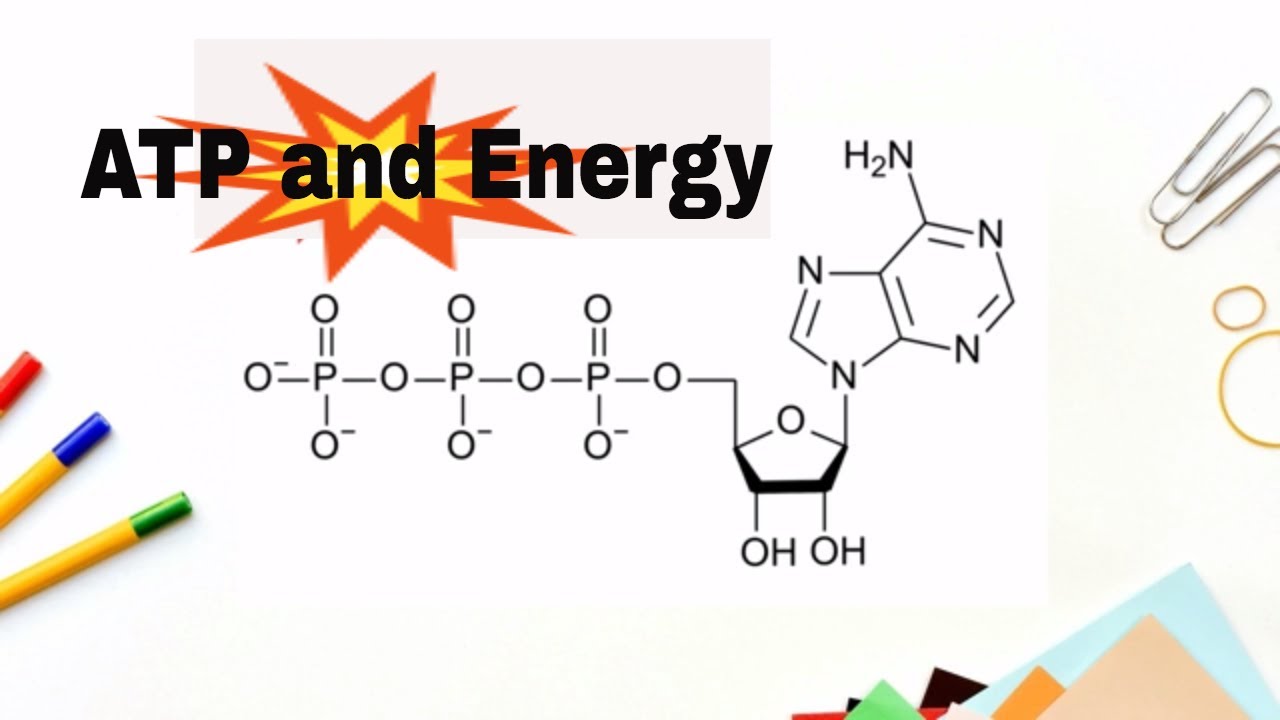
How Do We Get Energy From Atp? (Adenosne Triphosphate) - Youtube
It stores the energy released in the oxidation of glucose during cellular respiration.

How does atp give off energy. This is a natural coenzyme derived from vitamin b3 (niacin), which is essential for basic metabolism, respiration, the breakdown of sugars and fats,. Adenosine triphosphate (atp) is the primary energy carrier in all living organisms on earth. One of the phosphate groups is stripped off and bound to.
How does atp synthase obtain the energy to produce atp? In the formation of one glucose molecule 18 atp and 12 nadph molecules are utilised in the six turns of the calvin. The central goal of bioenergetics is coupling an energy requiring endergonic reaction to an exergonic reaction via a common intermediate.let me explain the above.
Microorganisms capture and store energy metabolized from food and light sources in. This would be the major. This puts loads of strain (energy = a) on the protein which is offset by the stabilization of binding the.
The second ingredient is nadh. The muscle cells burn off the atp they have floating around in about 3 seconds. In the mitochondria energy obtained from the chemical bonds in food is used to produce high energy molecules.
Atp or adenosine triphosphate acts as the energy currency of the cell. Atp is basically how the mitochondria creates energy in other words.tri means three, so there are three phosphate molecules in atp. When atp binds to protein, the protein breaks one of the phosphates off, and this phosphate pushes hard on the other two as it zooms away, doing mechanical work.
In a process called cellular respiration, chemical energy in food is converted into chemical energy that the cell can use, and stores it in. It’s also the closest thing scientists have found, at the microcellular level, to represent. An enzyme binds atp, which makes the protein structure bend or conform around the atp.
It is the main energy currency of the cell, and it is an end product of the processes. Atp is an abbreviation for the word adenosine triphosphate. It is mainly because of the breakdown of atp (adenosine triphosphate, a type of nucleic acid with an adenosine base, a ribose sugar, and 3 phosphate groups), alternatively.
Process of turning glucose into energy. The energy to make atp comes from glucose. Energy is released from atp when the end phosphate is.
If you're behind a web. If you're seeing this message, it means we're having trouble loading external resources on our website. The phosphagen system kicks in and supplies energy for 8 to 10 seconds.
It’s a chemical found deep within all our cells. Atp releases energy when the phosphodiester bonds are broken and atp is converted to adp and a phosphate group. In a process called cellular respiration, chemical energy in food is converted into chemical energy that the cell can use, and stores it in molecules of atp.
Atps are produced towards the stromal side of the thylakoid membrane. In order to create energy, the third. Energy is stored in the form of.
Adenosine triphosphate, also known as atp, is a molecule that carries energy within cells. Atp is produced by the oxidative reactions in the cytoplasm and. Atp structure, atp hydrolysis to adp, and reaction coupling.
Desalination methods are derived from the mechanisms and processes of rainfall. Energy consumption and recovery in reverse osmosis veera gnaneswar gude civil engineering department, oregon institute of technology, 3201 campus drive, klamath falls, or 97601, usa
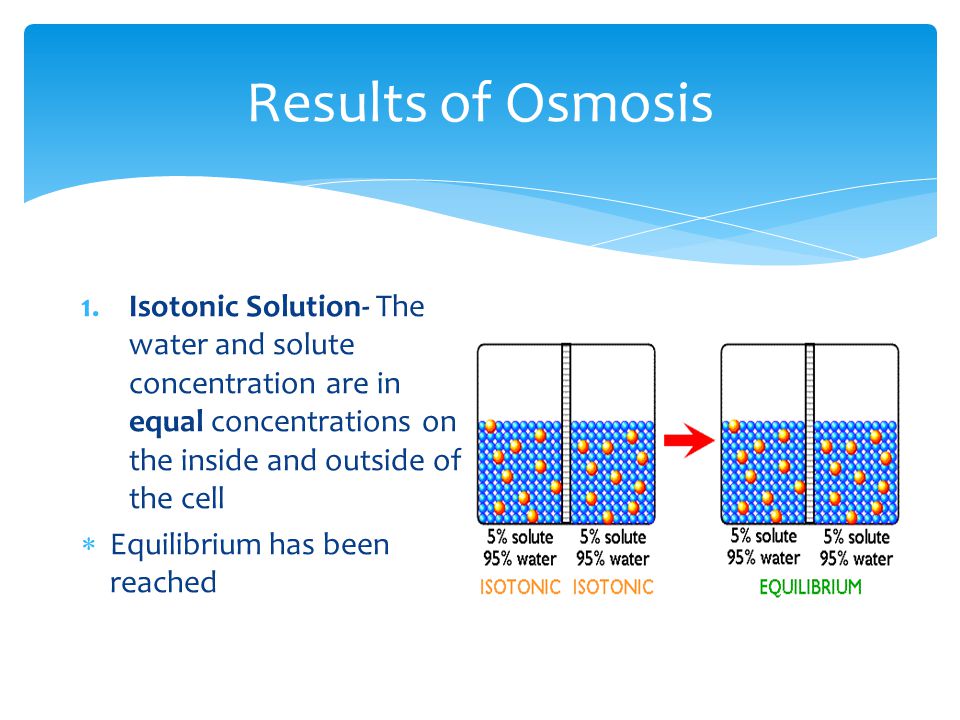
Osmosis. Energy Requirements? No Energy Required Modes Of Passive Transport? Diffusion Through Cell Membrane The Movement Of A Substance From. - Ppt Download
Reverse osmosis is what the name implies:

Energy requirement osmosis. Energy recovery and reuse options have already been very well explored in the current desalination industry. In 1977 cape coral, florida became the first municipality in the united states to use the ro process on a large scale with an initial operating capacity of 11.35 million liters (3 million us. How the isave energy efficient reverse osmosis works.
Osmotic power, salinity gradient power or blue energy is the energy available from the difference in the salt concentration between seawater and river water.two practical methods for this are. “it takes time and energy to pump each batch of water out, and then pump the next batch of water in for processing,” warsinger said. The movement of water from a higher concentration to a lower concentration “the diffusion of water through a semipermeable membrane” results of.
The case may be different during. The core process of desalination is the reverse osmosis process. Although it’s been around for hundreds of years, desalination still consumes too much energy for the environment’s sake.
It does, however, require more energy to purify water quickly. Report provides a general description of reverse osmosis (ro) systems, their influence on water use, and techniques for optimizing ro. In fact, some ro projects even involve just a replacement of the.
It consists of a high pressure pump followed by an energy recovery. Osmosis is a passive process and happens without any expenditure of energy. In osmosis, water with a lower concentration of solids naturally flows through a membrane to an area of higher concentration.
What is the energy requirement of osmosis? Osmosis a mode of diffusion osmosis: [5] the energy calculated above of 1.5 kilowatt.
“expending that time and energy generally. Diffusion is the movement of particles from high concentration regions to low concentration regions. It involves the movement of molecules from a region of higher concentration to lower concentration until the.
Reverse osmosis uses water pressure to operate and not electricity, that's why its efficiency is only 15% (in terms of o/p water by i/p water. Energy efficient reverse osmosis systems are now being used in all applications where ro filtration is needed. Energy consumption is one of the biggest hurdles desalination faces.
Reverse osmosis does not require much energy to purify water. Osmosis is a flow of water in a direction that moves a system towards equilibrium, so no energy is required once the concentration gradients are set up: